

Dental implants are necessary when a missing or failing tooth starts costing you more than the gap itself: the jawbone beneath the space shrinks without the stimulation of a tooth root, neighbouring teeth drift out of position, and your bite slowly changes shape. An implant is the only tooth replacement that replaces the root as well as the crown — which is why it's the treatment dentists recommend to stop that chain reaction rather than just hide it.
If you've recently lost a tooth, or you're weighing up whether that long-standing gap really needs attention, here's what's actually at stake.
What happens when a missing tooth is left untreated
Your jawbone behaves a lot like muscle: it stays strong where it's used. Every time you chew, the tooth root transmits gentle pressure into the bone around it, and that stimulation tells your body to maintain bone density there.
When a tooth is lost, that signal stops. The consequences follow a fairly predictable timeline:
- In the first year, the bone under the gap loses a noticeable amount of its width and height — the fastest phase of shrinkage.
- Neighbouring teeth begin to drift and tilt into the empty space, opening gaps elsewhere and making cleaning harder.
- The opposing tooth over-erupts — with nothing to bite against, it gradually grows out of its socket.
- Chewing shifts to one side, overloading other teeth and sometimes the jaw joint itself.
None of this happens overnight, which is exactly why it gets missed. By the time the changes are visible in the mirror, the bite has often been compensating for years.
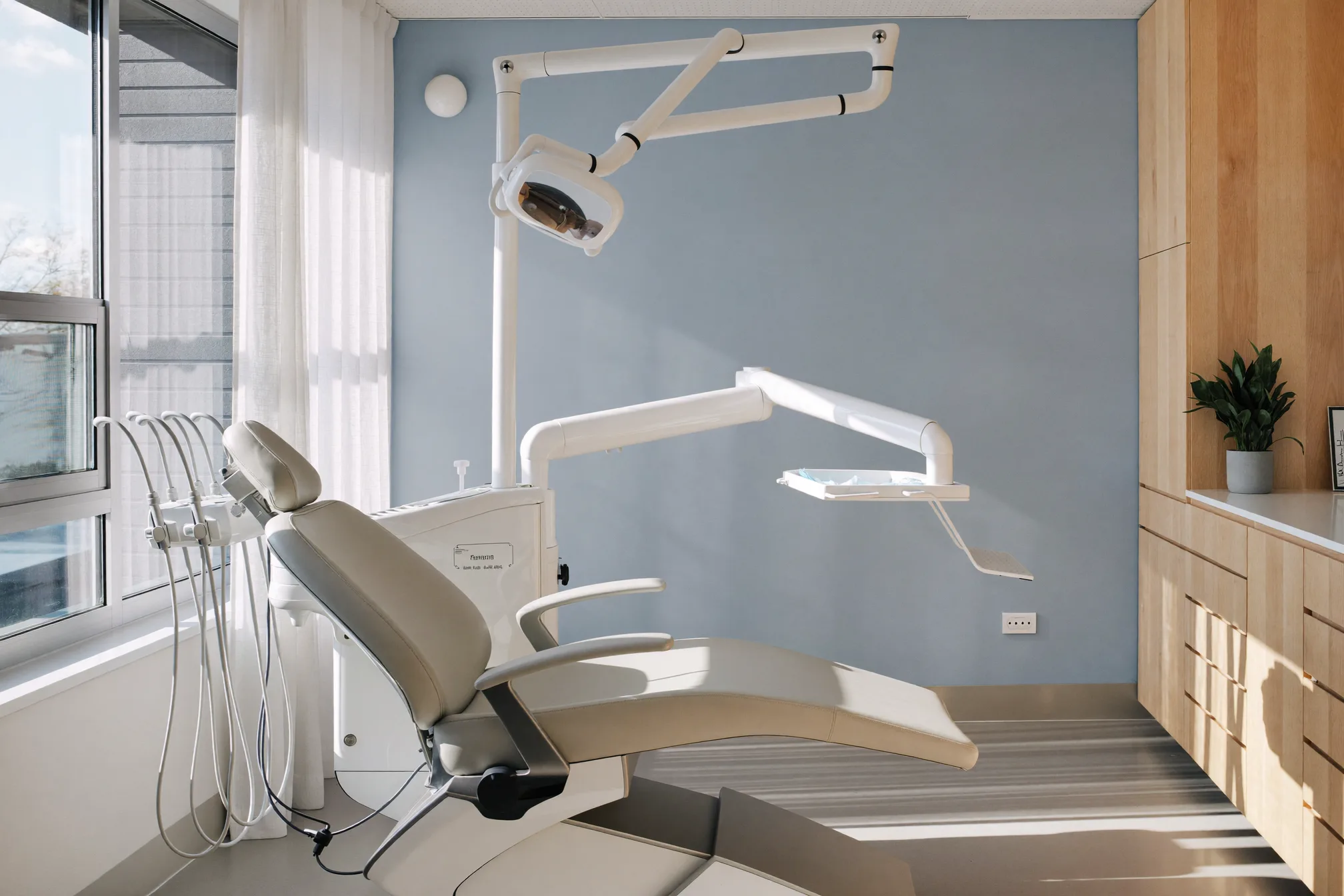
How dental implants work — and why they're different
A dental implant is a small titanium post placed into the jawbone where the tooth root used to be. Over a few months the bone fuses to the titanium surface — a process called osseointegration — creating an anchor that behaves remarkably like a natural root.
On top of that anchor, your dentist attaches a custom-made crown matched to your surrounding teeth.
This root-replacement design is what separates implants from the alternatives:
Replaces the crown | Replaces the root | Preserves jawbone | |
|---|---|---|---|
Dental implant | Yes | Yes | Yes |
Bridge | Yes | No | No |
Partial denture | Yes | No | No |
Bridges and dentures can restore the look of your smile and much of its function, and they remain the right choice for some patients. But only an implant keeps stimulating the bone underneath — which is why it's the only option that halts bone loss rather than sitting on top of it. You can read more about the procedure itself on our dental implant service page.
Signs you may need a dental implant
An implant is worth discussing with your dentist if any of these sound familiar:
- You've lost a tooth — recently or years ago — and the gap is still there.
- A tooth is failing: deep fracture, severe decay, or a root canal that hasn't held.
- Your denture no longer sits securely, making eating or speaking a daily negotiation.
- You avoid chewing on one side, or certain foods have quietly dropped off the menu.
- A front tooth is compromised and you want a replacement that looks and feels permanent.
If a tooth was removed a long time ago, don't assume you've missed the window. Even where bone has receded, a bone graft can often rebuild enough foundation for a successful implant.
The benefits go beyond appearance
Most people come to us thinking about the gap in their smile. The benefits they end up noticing daily are usually functional:
- Eating without thinking about it. Implants restore close to natural chewing strength — crusty bread, apples and steak stop being strategic decisions.
- Speech stays crisp. Unlike a loose denture, an implant doesn't shift mid-sentence.
- Your face keeps its structure. Preserving jawbone helps prevent the sunken look that follows long-term tooth loss.
- Neighbouring teeth are left alone. A bridge requires grinding down the healthy teeth either side; an implant doesn't touch them.
- It's a long-term investment. With good care, the implant itself can last decades — often outlasting every alternative.
What happens if you wait?
Waiting is the most common implant decision people regret — not because anything dramatic happens, but because the treatment gets harder while nothing appears to change.
The practical difference looks like this: an implant placed within a year or so of losing the tooth is often a straightforward single procedure. The same implant placed after five or ten years of bone shrinkage may first require grafting, adds months of healing time, and costs meaningfully more overall.
If you're not ready to decide, that's fine — but get the gap assessed. A short examination and an X-ray will tell you how much bone you have and how urgent (or not) your situation really is. That information costs you very little; losing it to time is what gets expensive.
Talk to us about implants in Hornsby
At Mirabel Dental Hornsby, implant treatment starts with an honest conversation: whether an implant is genuinely necessary in your case, what the alternatives look like, and what the realistic timeline and costs are — before anything is booked.
Our dentists place and restore implants at both clinics:
- Hornsby — 141 Peats Ferry Rd, Hornsby NSW 2077 · (02) 9987 2555
Book a consultation and we'll assess your gap, your bone and your options — and if you'd like to clear up a few common worries first, see our guide to dental implant myths.