
A tooth is only extracted when it genuinely can't be saved — or when keeping it would put your other teeth and gum at risk. Severe decay, a fracture below the gum line, advanced gum disease and infections that won't settle are the usual reasons. But extraction is a last resort, not a first move: wherever a tooth can be repaired and kept, that's almost always the better outcome.
If your dentist has raised the possibility of an extraction, it's worth understanding what leads to that decision, what might save the tooth instead, and what your options are for the space afterwards.
When a tooth can't be saved
Most teeth that come out have reached a point where repair is no longer reliable. The common reasons:
- Decay too extensive to restore. Once decay destroys enough of a tooth, there isn't sound structure left to hold a filling or a crown.
- A fracture below the gum line. A crack that runs down into the root can't be sealed, and the tooth becomes a lasting source of pain and infection.
- Advanced gum disease. When periodontitis destroys the bone anchoring a tooth, the tooth loosens and eventually can't be kept.
- A severe infection. An abscess that can't be resolved any other way may make removal the safest route.
- Problems that keep returning. Occasionally a tooth that's already been treated keeps failing, and removal becomes the more sensible option.
Crowding is a separate case — sometimes a healthy tooth is removed to make room for orthodontic treatment. That's a planned decision made with your orthodontist, not an emergency.
What we try first
Because a natural tooth is almost always worth keeping, extraction sits at the end of the list of options — not the top. Depending on the problem, the tooth might be saved by:
- Root canal treatment. If the inside of the tooth is infected but the outer structure is sound, root canal treatment clears the infection and lets you keep the tooth. It has an undeserved fearsome reputation — in practice it's the treatment that rescues teeth that once would have been pulled.
- A crown. A tooth that's cracked or heavily filled can often be capped with a crown that holds it together and restores full chewing strength.
- Periodontal (gum) treatment. Where gum disease is the threat, a course of deep cleaning and maintenance can stabilise a tooth that's started to loosen, provided it's caught in time.
Only when none of these can give a predictable, lasting result does removal become the right call.

How the decision is made
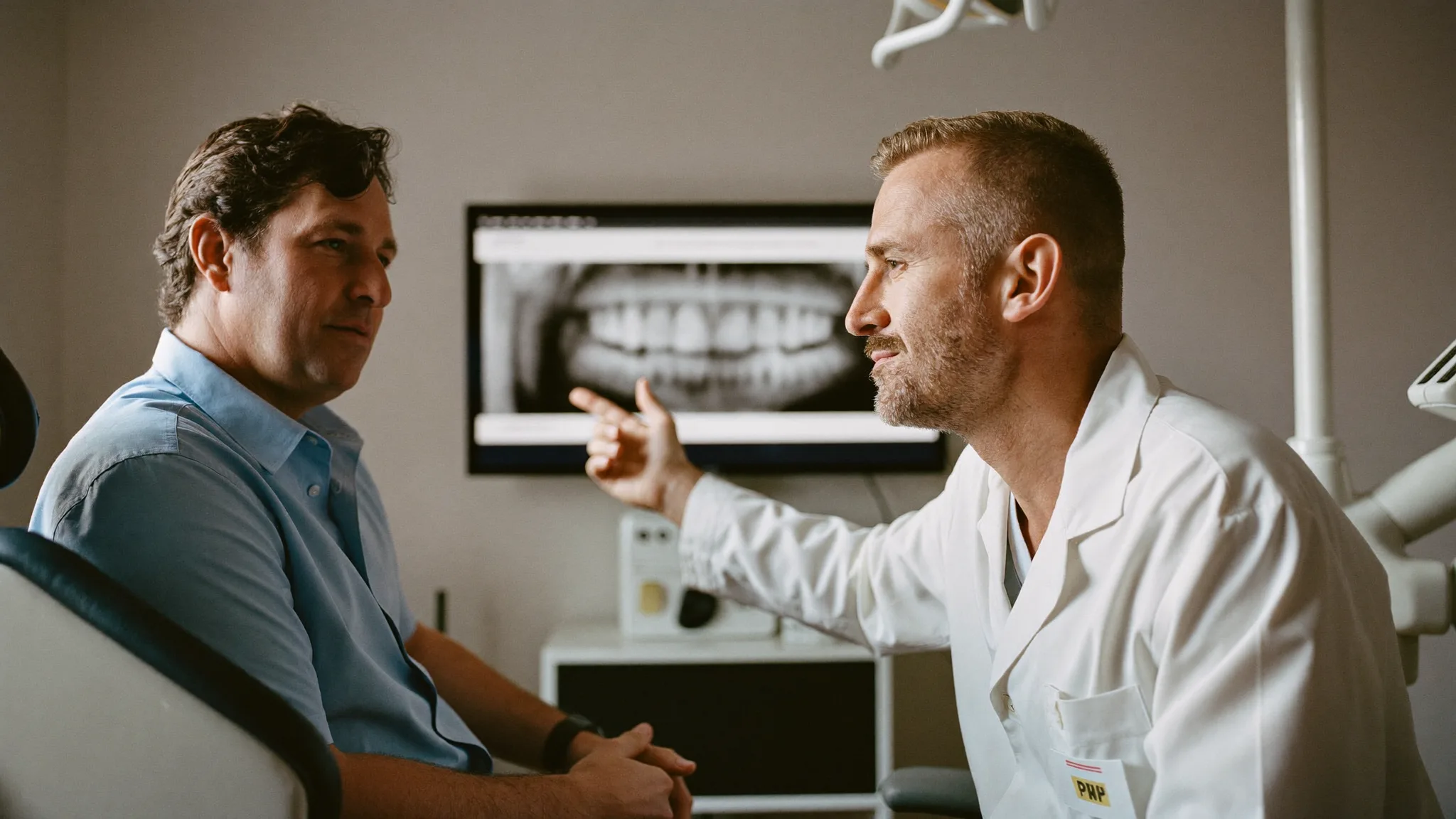
No tooth is removed on a hunch. The decision follows an examination and an X-ray — sometimes a 3D scan — which show how much healthy structure remains, how the roots and surrounding bone look, and whether infection has spread.
From there it's an honest conversation. We'll set out whether the tooth is realistically restorable, what saving it would involve, and how each path compares for comfort, cost and how long it's likely to last. Our default is to save wherever saving makes sense — and to be straight with you when it doesn't.
There's rarely a need to rush the decision, either. Unless there's an active infection or acute pain that needs dealing with quickly, you're welcome to take the information away, weigh it up, and come back with questions before anything is booked. It's your tooth, and it should be your call.
The extraction itself
If removal is the right decision, the procedure is more straightforward than most people expect. The area is fully numbed with local anaesthetic, so you feel pressure and movement but not pain. A simple extraction lifts the tooth out through the socket; a surgical extraction, used for teeth that are broken down or sitting below the gum, involves a small incision and stitches.
Afterwards, keeping the socket clean and protecting the early blood clot is what lets it heal smoothly. We'll give you clear aftercare instructions and stay available if anything doesn't feel right.
Filling the gap afterwards
Removing a tooth solves the immediate problem, but an empty space isn't meant to be permanent, especially further forward in the mouth. Left open, neighbouring teeth can drift into the gap and the bone beneath it gradually shrinks.
The main ways to replace a missing tooth are:
- A dental implant — a titanium root topped with a crown, and the only option that replaces the root and preserves the bone. Our guide to why dental implants are necessary explains this in detail.
- A bridge — a fixed replacement anchored to the healthy teeth either side of the gap.
- A denture — a removable option, often the practical choice when several teeth are missing.
There's no single right answer; the best choice depends on where the gap is, how much bone you have, and your budget. We'll walk you through it before you decide anything.
Talk to us about your options in Hornsby
If you're facing a possible extraction — or you're not sure a tooth you've been worrying about can be saved — the most useful step is a proper assessment. We'll tell you honestly whether it can be kept, and if it can't, what your best options are for the space.
Our dentists handle extractions and tooth replacement at both clinics:
- Hornsby — 141 Peats Ferry Rd, Hornsby NSW 2077 · (02) 9987 2555
Book a consultation and we'll give you a clear, honest picture before any decision is made.